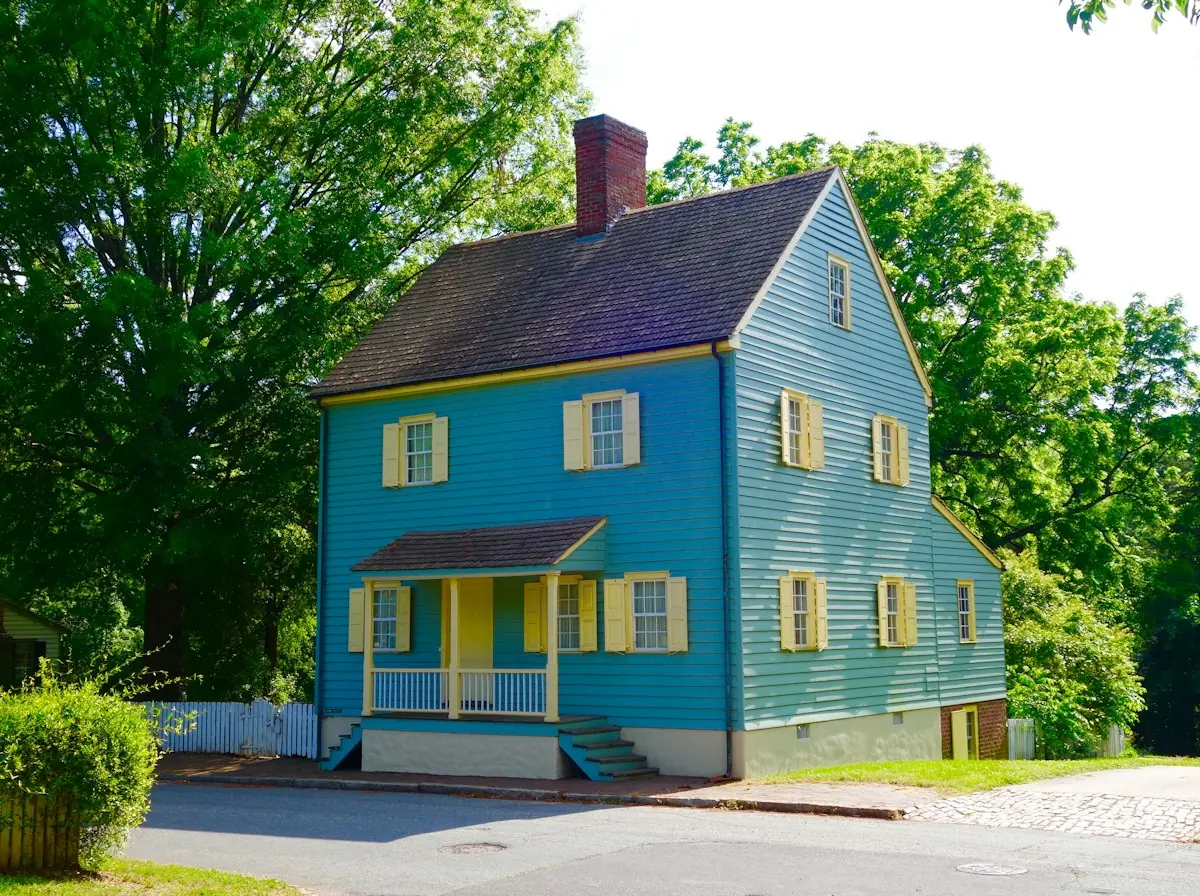
Roof Replacement in Wilmington, typically $12,000 - $22,000. The simplest roofs here. Layer count decides it. Local crew, a free written quote, and the permit pulled through the Wilmington building department.
The most straightforward roofing in this service area and the easiest to price honestly: moderate pitches, good access, little geometry. The variables are age and layer count, and two coverings is the ceiling before a tear-off stops being optional.
Simple roofs are where the difference between an architectural and a three-tab quote shows up most plainly, because nothing else in the price is complicated.
A town north-west of Reading that grew around the rail lines and later the highway, mixing residential neighborhoods with commercial and light industrial land. Mostly post-war detached housing on a regular pattern, consistent in scale and simple in shape, with some older properties along the through roads.

6 lanes of roofing work, each priced against a written scope.
The most straightforward replacement work in this service area -- moderate pitches, good access, little geometry.
Simple roofs fail simply, which is good news for a repair: a lifted course, a split pipe boot, a nail line backing out.
Streets of similar post-war houses give a useful test: if some dam and others do not, the roofs are the same, so the difference is what has been done inside them since.
Post-war houses here were mostly built for asphalt, so cedar is a deliberate upgrade rather than a restoration.
Post-war attached garages and rear additions, generally large and easy to reach, which keeps this work cheap and predictable.
On simple post-war roofs an inspection answers two questions quickly: how many coverings are up there and how much life the top one has left.
Massachusetts gives you more than most states. Both of the commonest ways to lose it are things the homeowner does.
Home Improvement Contractors register with the Office of Consumer Affairs and Business Regulation under M.G.L. c. 142A. Hire an unregistered contractor and you are NOT eligible for OCABR arbitration and NOT eligible to seek money from the Guaranty Fund. Not reduced -- not eligible.
This is the one almost nobody knows. Pull the permit yourself and you fall into the homeowner exemption, which disqualifies you from recourse under c. 142A and from the Fund. Obtaining permits is the registered contractor's responsibility under that same chapter.
Any home improvement over $1,000 must be in writing, which covers every roofing job. A verbal price on a roof is not a contract in this state, and a scope that says only 'strip and re-roof' cannot be held to anything.
We pull the permit. That is what keeps you eligible.
Lakeside and Victorian. Details, not area.
Big simple roofs under a lot of trees.
Large houses, complicated roofs, real cedar country.
Hilly, tight, and full of capes with rooms in the roof.
A city: every building type within one mile.
Published ranges and straight answers, before you ring round.
Rarely the full term in this climate. The rating describes the material under test conditions, not a roof on a particular house north of Boston. What shortens it here is the melt-refreeze cycle at the eaves, roof space ventilation, and how well the thing was nailed on day one. A 30 year product commonly gives 20 to 25 real years here, and a roof with proper ice barrier coverage and a working ventilation path will beat one without by several of them.
Nobody selling roofs is a neutral source on that, so here is what is known rather than a forecast. Roofing prices follow asphalt input costs, freight and local labor availability, and in this region they spike every spring because an entire winter's worth of damage gets reported in the same two weeks after the first real thaw. The practical consequence is not about the year -- it is that the cheapest time to replace a roof is when you choose to, and the most expensive is the month everybody else has decided at once.
A standard asphalt replacement on a Greater Boston single-family house typically runs $12,000 to $22,000, reaching about $30,000 on larger or more complicated roofs. Per square foot that is $6.75 to $11.50 for architectural shingle against $3.50 to $5.50 for three-tab. Boston-area labor puts these figures roughly 10 to 15 per cent above western Massachusetts, which is worth knowing if you are comparing against a statewide average.
Almost nobody in this trade quotes roofing by the hour, and you should be wary of one who offers to. Replacement work is priced by the square -- 100 square feet of roof area -- because the quantity is measurable and the risk of the job running long sits with the contractor rather than with you. Hourly pricing turns delays into your problem. Small repairs and diagnostic work are the exception and may carry a call-out or minimum charge, which should be stated up front.
The permit pulled by the contractor, which is whose job it is. Greater Boston figures, not a national calculator.