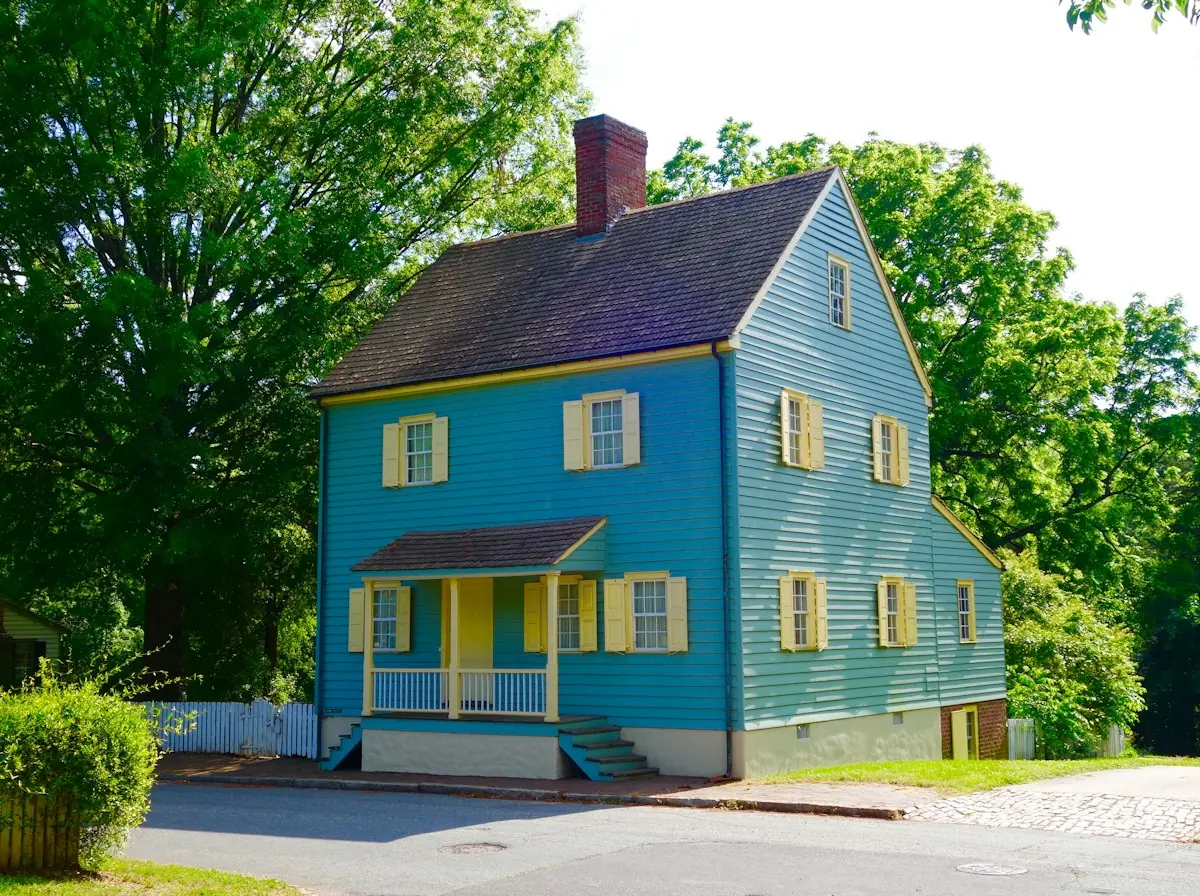
Roof Replacement in Wakefield, typically $12,000 - $22,000. Lakeside and Victorian. Details, not area. Local crew, a free written quote, and the permit pulled through the Wakefield building department.
Proximity to open water means wind gets at these roofs differently from the sheltered streets inland, and the older lakeside housing has the steep pitches and complicated rooflines that make a job hand work rather than area work.
Different town, different building department and fee schedule -- the registration is the same statewide one.
A neighboring town built around Lake Quannapowitt, with a dense older center near the water and residential streets spreading out from it. A wide age range close together: Victorian and turn-of-the-century housing near the lake and the center, post-war development further out, and a fair amount of two-family stock.

6 lanes of roofing work, each priced against a written scope.
Older housing near the lake and the center means steep pitches, dormers and rooflines with a lot going on, and that is hand work rather than area work.
Complicated older roofs fail at their details rather than in the field -- valley linings, dormer cheeks, chimney flashings.
Older housing with knee walls, finished attic rooms and complicated roof shapes is genuinely hard to insulate and ventilate to the wall plate, so the fix here is detailed and specific rather than 'more insulation'.
On the older housing near the center, cedar is often what was originally there, and matching it matters for how the street reads.
Older houses here carry flat roofs over ells, porches and rear additions built at various dates, often over a tired built-up roof nobody has ever taken off.
On complicated older roofs an inspection is largely a tour of the details, because that is where these fail.
Massachusetts gives you more than most states. Both of the commonest ways to lose it are things the homeowner does.
Home Improvement Contractors register with the Office of Consumer Affairs and Business Regulation under M.G.L. c. 142A. Hire an unregistered contractor and you are NOT eligible for OCABR arbitration and NOT eligible to seek money from the Guaranty Fund. Not reduced -- not eligible.
This is the one almost nobody knows. Pull the permit yourself and you fall into the homeowner exemption, which disqualifies you from recourse under c. 142A and from the Fund. Obtaining permits is the registered contractor's responsibility under that same chapter.
Any home improvement over $1,000 must be in writing, which covers every roofing job. A verbal price on a roof is not a contract in this state, and a scope that says only 'strip and re-roof' cannot be held to anything.
We pull the permit. That is what keeps you eligible.
Big simple roofs under a lot of trees.
Large houses, complicated roofs, real cedar country.
The simplest roofs here. Layer count decides it.
Hilly, tight, and full of capes with rooms in the roof.
A city: every building type within one mile.
Published ranges and straight answers, before you ring round.
A standard asphalt replacement on a Greater Boston single-family house typically runs $12,000 to $22,000, reaching about $30,000 on larger or more complicated roofs. Per square foot that is $6.75 to $11.50 for architectural shingle against $3.50 to $5.50 for three-tab. Boston-area labor puts these figures roughly 10 to 15 per cent above western Massachusetts, which is worth knowing if you are comparing against a statewide average.
Not on age alone. Twenty years is well inside the normal service life of architectural asphalt and at the end of it for three-tab, so the first question is which you have. Then it is condition: granule loss, brittleness, how flat the covering lies, whether the deck is sound. North of Boston, add one more -- whether it has been damming. A roof with twenty winters of meltwater under its bottom courses is considerably older at the eaves than it is anywhere else, and that is where it will fail.
Nobody selling roofs is a neutral source on that, so here is what is known rather than a forecast. Roofing prices follow asphalt input costs, freight and local labor availability, and in this region they spike every spring because an entire winter's worth of damage gets reported in the same two weeks after the first real thaw. The practical consequence is not about the year -- it is that the cheapest time to replace a roof is when you choose to, and the most expensive is the month everybody else has decided at once.
It is a Florida rule and it has no force in Massachusetts. The 25% rule comes from the Florida Building Code Existing Building, where repairing or replacing more than a quarter of a roof within a year can require the whole roof to be brought up to current code. Massachusetts has no equivalent provision -- what governs here is the state building code and your own municipality's permitting. It turns up in searches because national content repeats it without saying which state it belongs to.
The permit pulled by the contractor, which is whose job it is. Greater Boston figures, not a national calculator.