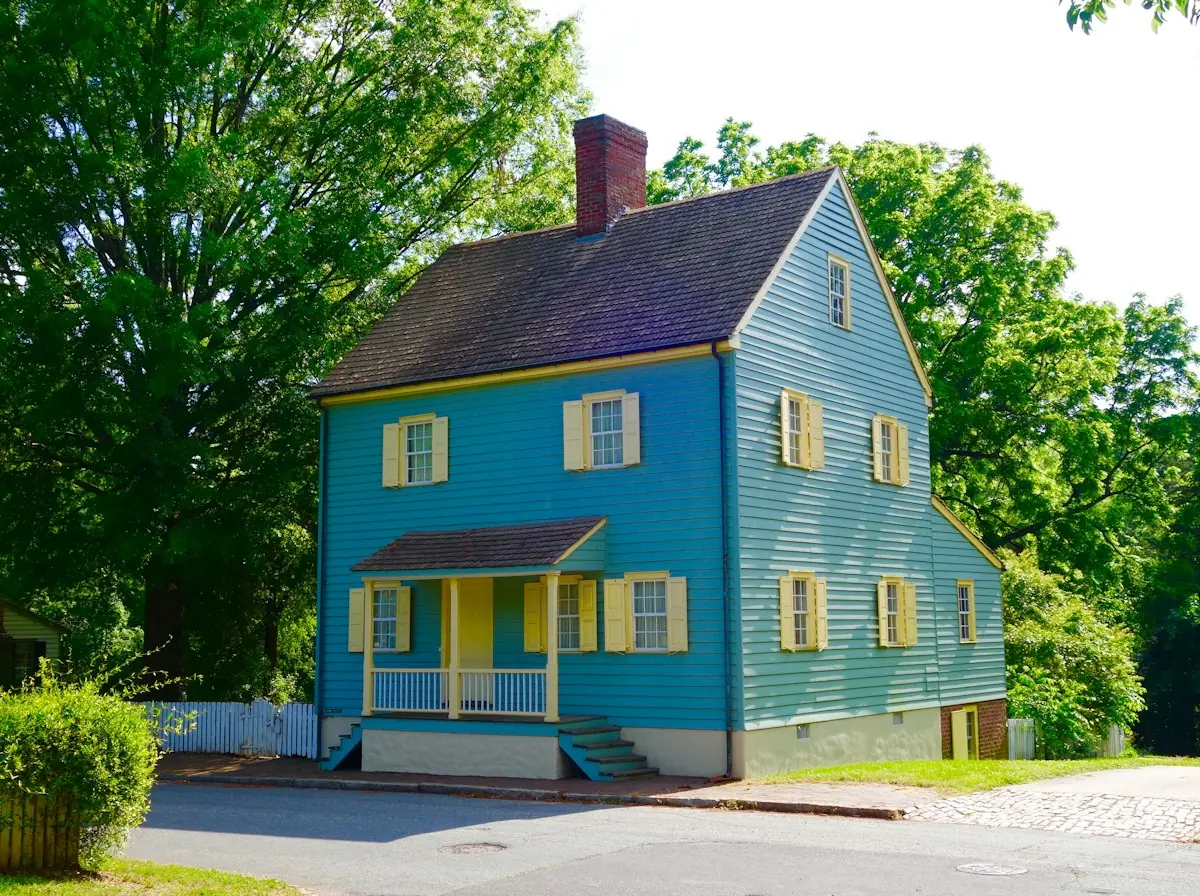
Roof Replacement in North Reading, typically $12,000 - $22,000. Big simple roofs under a lot of trees. Local crew, a free written quote, and the permit pulled through the North Reading building department.
Large simple roofs under heavy tree cover, which is a specific combination: the roofs themselves are cheap to price accurately, and the debris in the valleys and gutters is what actually ages them.
Tree cover here is the variable rather than the architecture -- shaded slopes hold damp long after the sunlit ones have dried.
A lower-density town directly north, developed later and more loosely than Reading, with larger lots and more tree cover. Post-war and later detached housing on generous wooded plots, colonials and splits at a consistent scale, with simpler roof geometry than the older centers.

6 lanes of roofing work, each priced against a written scope.
Large, simple, accessible roofs on wooded lots -- the best combination there is for pricing a replacement accurately.
Under this much canopy the recurring repair is a valley, not a hole.
Simple accessible roofs are the easiest to put right, because the roof space is usually open and reachable.
Heavy tree cover is the hardest condition there is for cedar.
A flat roof under mature trees is a debris trap, and a blocked outlet on a low-slope deck does not overflow harmlessly the way a gutter does -- it ponds until it finds a seam, and in January it freezes there.
Under this canopy the inspection pays attention to shaded slopes, valleys and gutter runs, because that is where a roof here ages first.
Massachusetts gives you more than most states. Both of the commonest ways to lose it are things the homeowner does.
Home Improvement Contractors register with the Office of Consumer Affairs and Business Regulation under M.G.L. c. 142A. Hire an unregistered contractor and you are NOT eligible for OCABR arbitration and NOT eligible to seek money from the Guaranty Fund. Not reduced -- not eligible.
This is the one almost nobody knows. Pull the permit yourself and you fall into the homeowner exemption, which disqualifies you from recourse under c. 142A and from the Fund. Obtaining permits is the registered contractor's responsibility under that same chapter.
Any home improvement over $1,000 must be in writing, which covers every roofing job. A verbal price on a roof is not a contract in this state, and a scope that says only 'strip and re-roof' cannot be held to anything.
We pull the permit. That is what keeps you eligible.
Lakeside and Victorian. Details, not area.
Large houses, complicated roofs, real cedar country.
The simplest roofs here. Layer count decides it.
Hilly, tight, and full of capes with rooms in the roof.
A city: every building type within one mile.
Published ranges and straight answers, before you ring round.
Almost nobody in this trade quotes roofing by the hour, and you should be wary of one who offers to. Replacement work is priced by the square -- 100 square feet of roof area -- because the quantity is measurable and the risk of the job running long sits with the contractor rather than with you. Hourly pricing turns delays into your problem. Small repairs and diagnostic work are the exception and may carry a call-out or minimum charge, which should be stated up front.
Rarely the full term in this climate. The rating describes the material under test conditions, not a roof on a particular house north of Boston. What shortens it here is the melt-refreeze cycle at the eaves, roof space ventilation, and how well the thing was nailed on day one. A 30 year product commonly gives 20 to 25 real years here, and a roof with proper ice barrier coverage and a working ventilation path will beat one without by several of them.
It is a Florida rule and it has no force in Massachusetts. The 25% rule comes from the Florida Building Code Existing Building, where repairing or replacing more than a quarter of a roof within a year can require the whole roof to be brought up to current code. Massachusetts has no equivalent provision -- what governs here is the state building code and your own municipality's permitting. It turns up in searches because national content repeats it without saying which state it belongs to.
Yes in almost every municipality, and here is the part that matters far more than the answer: DO NOT PULL IT YOURSELF. Obtaining permits is the registered contractor's responsibility under M.G.L. c. 142A. A homeowner who pulls their own permit falls into the homeowner exemption, which disqualifies them from recourse under c. 142A and from the Guaranty Fund -- the fund that compensates eligible homeowners up to $25,000 toward unpaid judgments against a contractor. So when a roofer suggests it would be quicker if you pulled it, what is actually being proposed is that you give up your protection to save somebody an afternoon.
The permit pulled by the contractor, which is whose job it is. Greater Boston figures, not a national calculator.