Cedar Shake Roof Replacement in Wilmington from $12. $12 to $20 a square foot, and the only roof on this site that needs looking after. Free inspection and a written quote.
Post-war houses here were mostly built for asphalt, so cedar is a deliberate upgrade rather than a restoration. It can be done and it looks well, but the cost-per-year comparison only favors it if the roof will actually be maintained.
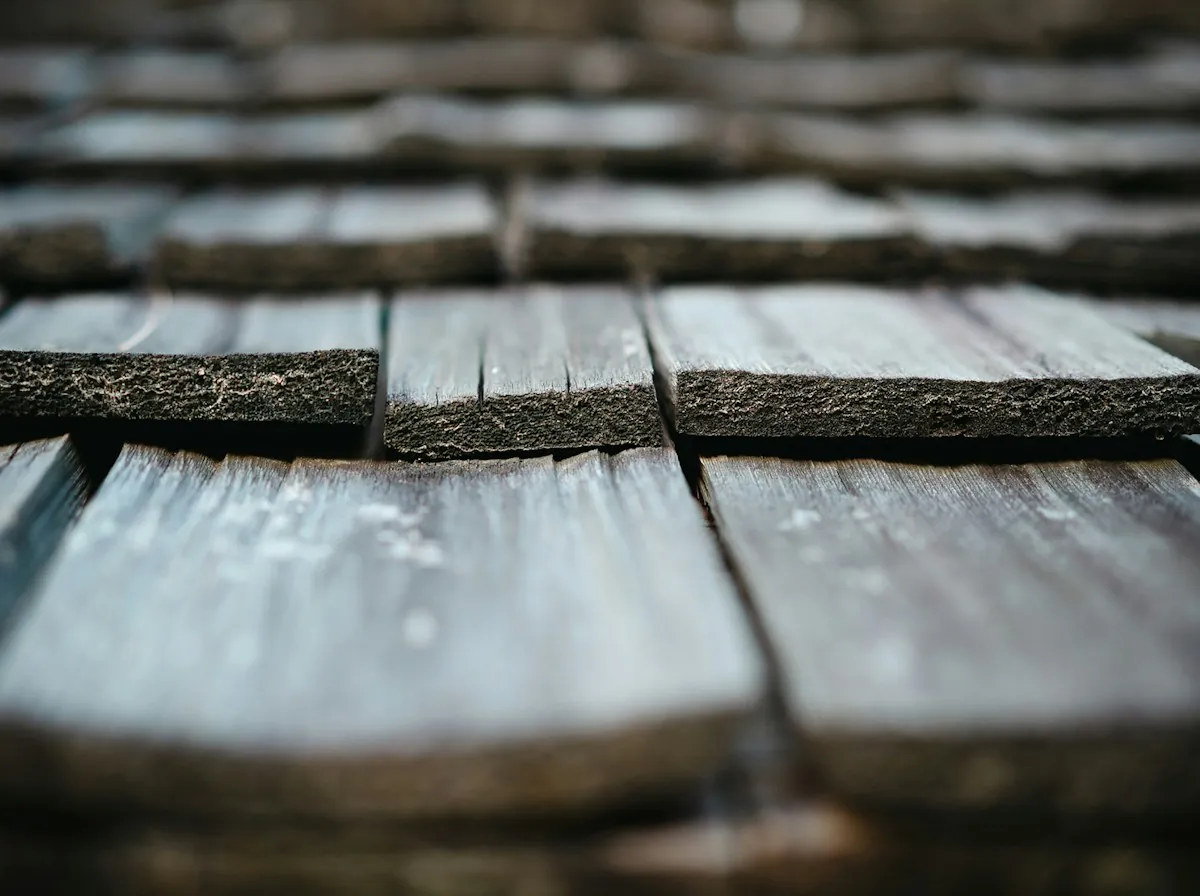
Cedar shake installs at roughly $12 to $20 per square foot in this market, against $6.75 to $11.50 for architectural asphalt. It is the traditional New England covering, it looks like nothing else, and on the right house it is worth the money.


Cedar shake installs at roughly $12 to $20 per square foot here, against $6.75 to $11.50 for architectural asphalt. It is the traditional New England covering and on the right house it is worth it -- but it is the only roof on this site that genuinely needs looking after. The most predictable pricing here. Simple shapes and good access mean the variables are visible: the layer count, and whether you are being quoted architectural at $6.75 to $11.50 or three-tab nearer $3.50 for a similar-looking total.
Sun and air. Cedar has to dry out after it gets wet, so an open site with slopes that see daylight is what it wants, and ventilation beneath the shakes is part of the system rather than an extra.
Shade and debris. A north slope under trees holds damp, moss grows into it, and a cedar roof that should give decades gives considerably less. On a heavily wooded lot the honest recommendation is often asphalt.
Cost per year of expected life, conditional on maintenance. A looked-after cedar roof outlasts asphalt comfortably; an ignored one does not, and the comparison is meaningless without deciding which you will be.
The most straightforward roofing in this service area and the easiest to price honestly: moderate pitches, good access, little geometry. The variables are age and layer count, and two coverings is the ceiling before a tear-off stops being optional.
Simple roofs are where the difference between an architectural and a three-tab quote shows up most plainly, because nothing else in the price is complicated.
Massachusetts gives you more than most states. Both of the commonest ways to lose it are things the homeowner does.
This is the one almost nobody knows. Pull the permit yourself and you fall into the homeowner exemption, which disqualifies you from recourse under c. 142A and from the Fund. Obtaining permits is the registered contractor's responsibility under that same chapter.
Any home improvement over $1,000 must be in writing, which covers every roofing job. A verbal price on a roof is not a contract in this state, and a scope that says only 'strip and re-roof' cannot be held to anything.
How far does the ice barrier run up the slope? In this climate a token strip at the eaves is not enough -- it wants to reach past the point where the heated building ends. It is the single most useful thing you can ask a roofer north of Boston.
The most straightforward replacement work in this service area -- moderate pitches, good access, little geometry.
Simple roofs fail simply, which is good news for a repair: a lifted course, a split pipe boot, a nail line backing out.
Streets of similar post-war houses give a useful test: if some dam and others do not, the roofs are the same, so the difference is what has been done inside them since.
Post-war attached garages and rear additions, generally large and easy to reach, which keeps this work cheap and predictable.
On simple post-war roofs an inspection answers two questions quickly: how many coverings are up there and how much life the top one has left.
We pull the permit. That is what keeps you eligible.
Lakeside and Victorian. Details, not area.
Big simple roofs under a lot of trees.
Large houses, complicated roofs, real cedar country.
Hilly, tight, and full of capes with rooms in the roof.
A city: every building type within one mile.
What is worth knowing before you book this.
On an open site with slopes that see sun and air, and on a house the architecture suits, yes -- it outlasts asphalt comfortably when it is looked after. On a heavily wooded lot it is not, because cedar has to dry out and shade plus debris will end it years early. We will say which yours is.
Keeping it clear of debris, keeping moss off, and keeping the ventilation beneath it working. That is not onerous but it is not nothing, and it is the whole difference between a cedar roof that justifies its price and one that does not.
Rarely the full term in this climate. The rating describes the material under test conditions, not a roof on a particular house north of Boston. What shortens it here is the melt-refreeze cycle at the eaves, roof space ventilation, and how well the thing was nailed on day one. A 30 year product commonly gives 20 to 25 real years here, and a roof with proper ice barrier coverage and a working ventilation path will beat one without by several of them.
For a standard asphalt roof on an average house, it is at the top of the range -- most Greater Boston single-family replacements land at $12,000 to $22,000. It is entirely reasonable for a large or steeply pitched house, a roof with a lot of dormers and valleys, or cedar shake at $12 to $20 a square foot. The number alone does not answer the question; what the quote itemizes does. If it does not break out area, tear-off, decking and the ice barrier, no figure can be judged.
It is a Florida rule and it has no force in Massachusetts. The 25% rule comes from the Florida Building Code Existing Building, where repairing or replacing more than a quarter of a roof within a year can require the whole roof to be brought up to current code. Massachusetts has no equivalent provision -- what governs here is the state building code and your own municipality's permitting. It turns up in searches because national content repeats it without saying which state it belongs to.
The HIC registration number on the paperwork, not just a website. A written contract, as this state requires over $1,000.