Ice Dam Repair in Reading from $300. A heat problem wearing a roofing costume. New shingles will not fix it. Free inspection and a written quote.
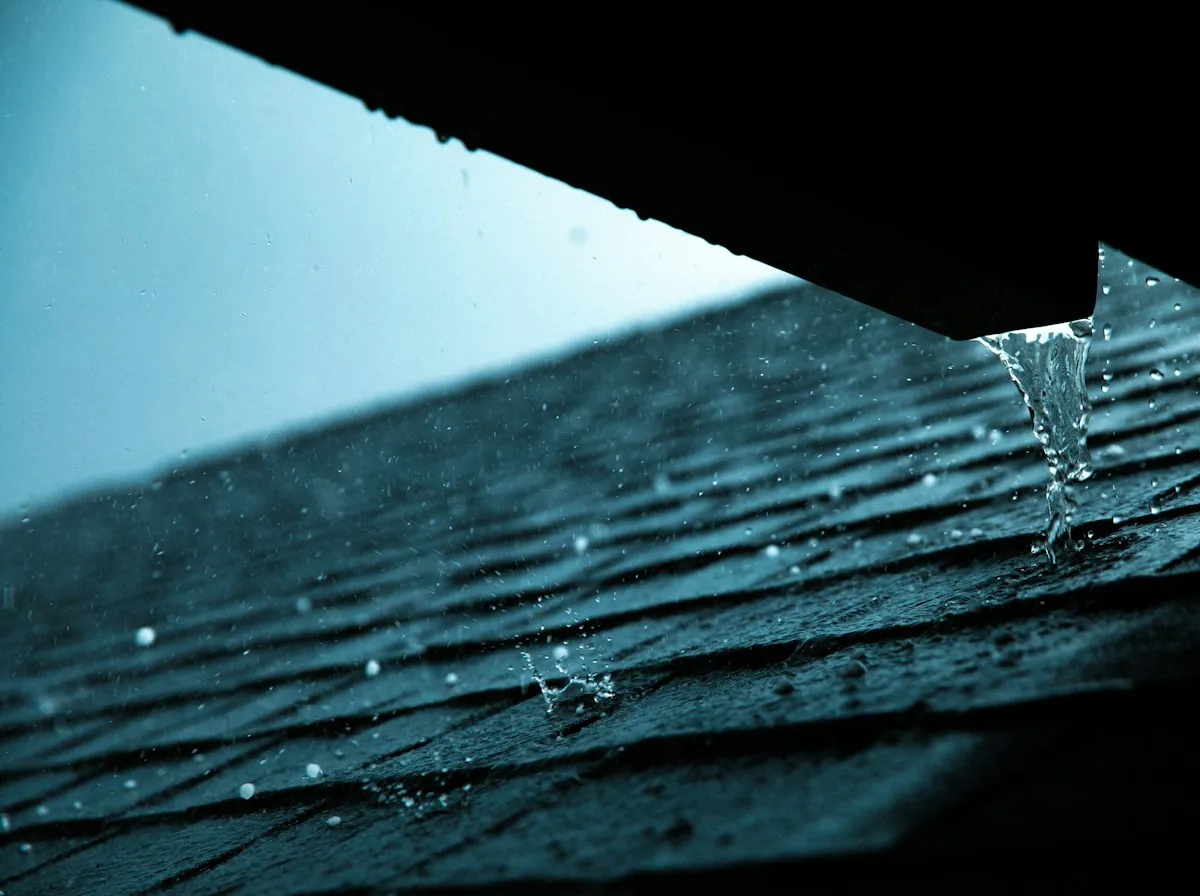
A dam forms because heat escaping into the roof space melts the snowpack from beneath, the meltwater refreezes at the cold overhang, and the ridge of ice holds the next lot back until it gets under the courses. On an old house with no ice barrier at the eaves, it will. New shingles change none of that.
An ice dam forms when heat escaping into the roof space melts the underside of the snowpack, the meltwater runs down to the cold overhang beyond the heated building, and freezes there. The ridge of ice that builds holds the next lot of meltwater back until it finds a way under the courses -- which, on an old house with no ice barrier, it will.


Clearing a dam safely is generally $300 to $900 depending on access and how much of it there is. That stops the water. It does not stop the dam, because an ice dam is a heat problem rather than a roofing one, and the work that ends it is insulation, air sealing and ventilation. Two things sit on top of the $12,000 to $22,000 a typical house costs. The winter specification -- ice barrier coverage and ventilation, which are the parts that decide how many seasons the roof sees. And the permit fee, which is the town's and which the contractor pulls.
More than the ceiling. Repeated damming works water under the courses at the eaves winter after winter, so a roof that dams every year is being aged prematurely from the bottom up.
Because the covering was rarely the cause. Plenty of people in this town have paid $15,000 or more for a roof that dammed again the following February, because the warm roof space and the cold eaves were never addressed.
Insulation carried properly to the wall plate, air leaks from the house sealed, soffit ventilation opened up, any fan discharging into the roof taken outside, and ice barrier that runs far enough up the slope to sit inside the heated envelope.
Two things decide a Reading job. The winter, because wet heavy snow sits and ice damming is a season rather than an incident. And the paperwork: the permit is ours to pull under c. 142A, and a homeowner who pulls their own loses Guaranty Fund eligibility.
The registration that protects you is statewide, so it does not change at any town line on this site -- only the building department does.
So the covering is usually innocent. The causes are a warm roof space and a cold eaves: insulation that stops short of the wall plate, air leaking up from the house, blocked or absent soffit ventilation, sometimes a bathroom fan discharging into the roof rather than out of it. On a cape or a finished attic -- and this town has plenty -- there may be very little room to fix any of that, which is worth knowing before anybody promises a cure.
The first two are free, checkable, and worth $25,000 between them.
Past the wall plate, into the heated envelope -- not a token strip along the eaves. This is the detail that decides whether a new roof solves your winter problem or simply looks better while it continues.
Nobody knows how much deck has softened until the covering is off. A rate per sheet is honest; a lump sum gets revisited upwards once the roof is open.
If the roof has been damming, the covering was probably not the cause. A quote that replaces shingles and says nothing about the roof space is quoting for the symptom.
$12,000 to $22,000 on a typical Greater Boston single-family house, reaching about $30,000 on larger or more complicated roofs.
$350 to $1,800 covers most repairs, from about $150 for something minor.
Cedar runs $12 to $20 a square foot against $6.75 to $11.50 for architectural asphalt.
$5 to $14 a square foot, EPDM $5 to $9 and TPO $6 to $12.
The roof space is where an inspection earns its money in this climate.
Lakeside and Victorian. Details, not area.
Big simple roofs under a lot of trees.
Large houses, complicated roofs, real cedar country.
The simplest roofs here. Layer count decides it.
Hilly, tight, and full of capes with rooms in the roof.
A city: every building type within one mile.
What is worth knowing before you book this.
Usually not, and it is the most expensive misunderstanding in this market. A dam forms because heat escaping into the roof space melts the snow above it and the water refreezes at the cold overhang. New shingles change none of that. Plenty of people here have paid $15,000 or more and dammed again the next February.
No. Chipping takes granules and sometimes whole tabs off with it, and people fall doing it. Clearing is done carefully from a position that is safe to work from -- and it is a holding action either way, because the actual fix is insulation, air sealing and ventilation.
Yes in almost every municipality, and here is the part that matters far more than the answer: DO NOT PULL IT YOURSELF. Obtaining permits is the registered contractor's responsibility under M.G.L. c. 142A. A homeowner who pulls their own permit falls into the homeowner exemption, which disqualifies them from recourse under c. 142A and from the Guaranty Fund -- the fund that compensates eligible homeowners up to $25,000 toward unpaid judgments against a contractor. So when a roofer suggests it would be quicker if you pulled it, what is actually being proposed is that you give up your protection to save somebody an afternoon.
A standard asphalt replacement on a Greater Boston single-family house typically runs $12,000 to $22,000, reaching about $30,000 on larger or more complicated roofs. Per square foot that is $6.75 to $11.50 for architectural shingle against $3.50 to $5.50 for three-tab. Boston-area labor puts these figures roughly 10 to 15 per cent above western Massachusetts, which is worth knowing if you are comparing against a statewide average.
Not on age alone. Twenty years is well inside the normal service life of architectural asphalt and at the end of it for three-tab, so the first question is which you have. Then it is condition: granule loss, brittleness, how flat the covering lies, whether the deck is sound. North of Boston, add one more -- whether it has been damming. A roof with twenty winters of meltwater under its bottom courses is considerably older at the eaves than it is anywhere else, and that is where it will fail.
The HIC registration number on the paperwork, not just a website. A written contract, as this state requires over $1,000.