Roof Inspection in Wakefield from free with a quote. What you have got, how many winters it has left, and whether the roof space is the real problem. Free inspection and a written quote.
On complicated older roofs an inspection is largely a tour of the details, because that is where these fail. It also settles whether the deck is board sheathing or plywood, which decides what will hold a fixing and whether an overlay is even possible.
Most people book one because somebody has told them the roof needs work -- a home inspector during a sale, a neighbor's contractor, or somebody who knocked. All three deserve a second opinion from a person who did not raise it.


The inspection is free when attached to a quote, and what follows is the ordinary repair range of $350 to $1,800. You get the slope, the details that fail, the roof space, photographs of anything reported and a written view on remaining life -- including when that view is that nothing needs doing. Older complicated roofs have more surface and more detail than their plan area suggests, so expect a higher figure per square foot of house than a post-war equivalent. Valleys and dormers are hand work, and hand work is where the hours go.
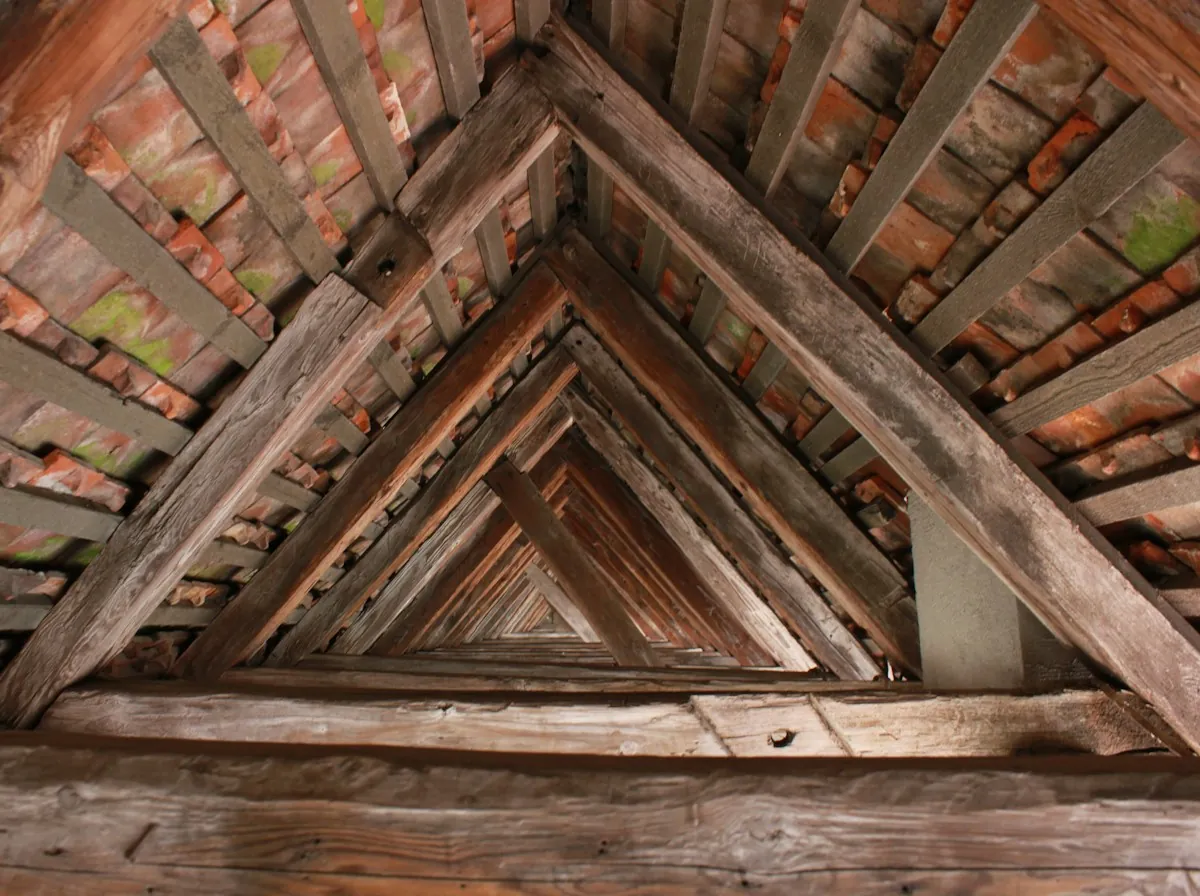
In this climate the underside holds the evidence. Old water tracks above the wall plate say ice damming rather than a hole. Frost on the deck says ventilation. Dark flattened insulation says where to look next.
Whether the deck is board sheathing or plywood, and how many coverings sit on it. Both decide what can be done next and neither is visible from the ground.
Find work every time. If the covering is sound and whoever raised the doubt was wrong, that is what the document says.
Proximity to open water means wind gets at these roofs differently from the sheltered streets inland, and the older lakeside housing has the steep pitches and complicated rooflines that make a job hand work rather than area work.
Different town, different building department and fee schedule -- the registration is the same statewide one.
The first two are free, checkable, and worth $25,000 between them.
Past the wall plate, into the heated envelope -- not a token strip along the eaves. This is the detail that decides whether a new roof solves your winter problem or simply looks better while it continues.
Nobody knows how much deck has softened until the covering is off. A rate per sheet is honest; a lump sum gets revisited upwards once the roof is open.
If the roof has been damming, the covering was probably not the cause. A quote that replaces shingles and says nothing about the roof space is quoting for the symptom.
Older housing near the lake and the center means steep pitches, dormers and rooflines with a lot going on, and that is hand work rather than area work.
Complicated older roofs fail at their details rather than in the field -- valley linings, dormer cheeks, chimney flashings.
Older housing with knee walls, finished attic rooms and complicated roof shapes is genuinely hard to insulate and ventilate to the wall plate, so the fix here is detailed and specific rather than 'more insulation'.
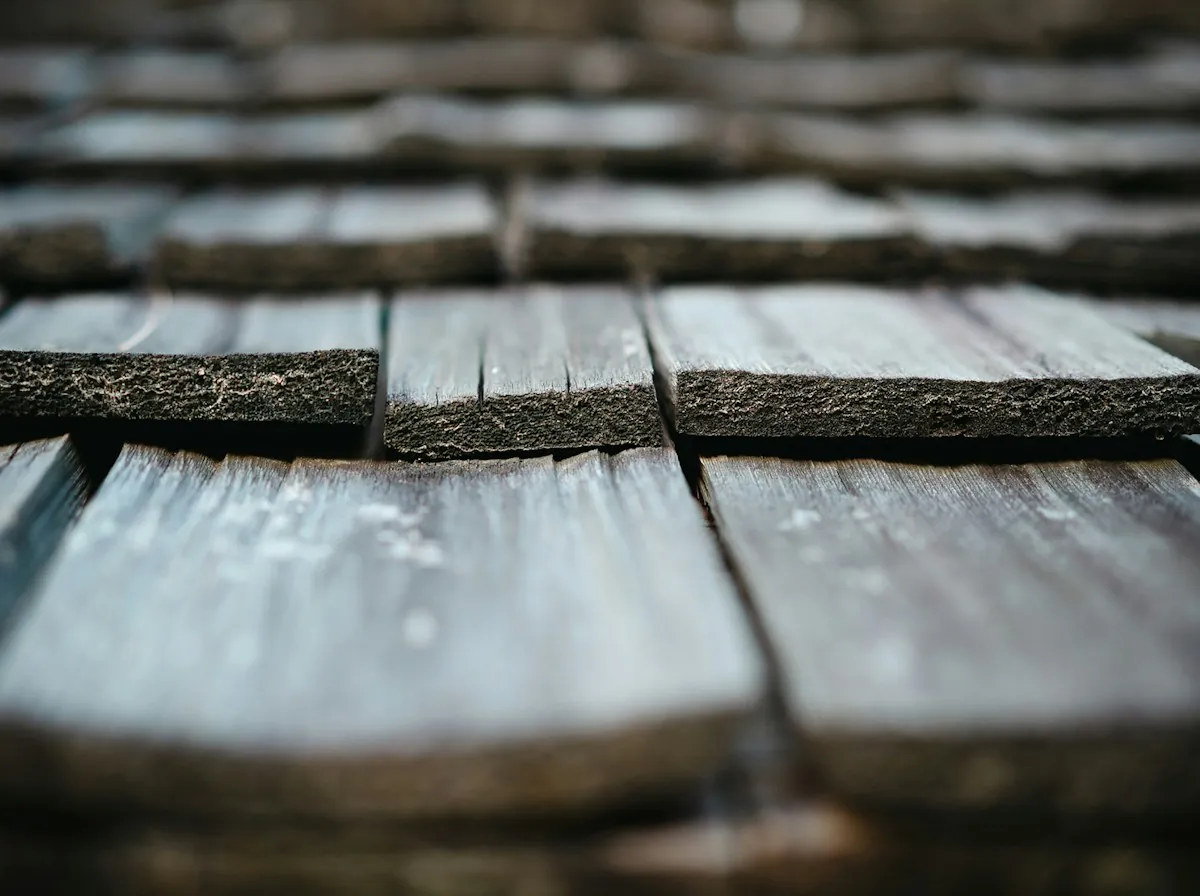
On the older housing near the center, cedar is often what was originally there, and matching it matters for how the street reads.
Older houses here carry flat roofs over ells, porches and rear additions built at various dates, often over a tired built-up roof nobody has ever taken off.
We pull the permit. That is what keeps you eligible.
Big simple roofs under a lot of trees.
Large houses, complicated roofs, real cedar country.
The simplest roofs here. Layer count decides it.
Hilly, tight, and full of capes with rooms in the roof.
A city: every building type within one mile.
What is worth knowing before you book this.
Yes, in writing. If the honest answer is that the covering has years left and whoever told you otherwise was wrong, that is what the document says. A report that finds work every single time is not an inspection service.
Most of it, in this climate. Old water tracks above the wall plate mean ice damming rather than a hole. Frost on the underside of the deck means ventilation. Insulation flattened and dark in one patch shows where water has been getting in repeatedly. None of that is visible from outside.
A standard asphalt replacement on a Greater Boston single-family house typically runs $12,000 to $22,000, reaching about $30,000 on larger or more complicated roofs. Per square foot that is $6.75 to $11.50 for architectural shingle against $3.50 to $5.50 for three-tab. Boston-area labor puts these figures roughly 10 to 15 per cent above western Massachusetts, which is worth knowing if you are comparing against a statewide average.
Almost nobody in this trade quotes roofing by the hour, and you should be wary of one who offers to. Replacement work is priced by the square -- 100 square feet of roof area -- because the quantity is measurable and the risk of the job running long sits with the contractor rather than with you. Hourly pricing turns delays into your problem. Small repairs and diagnostic work are the exception and may carry a call-out or minimum charge, which should be stated up front.
Rarely the full term in this climate. The rating describes the material under test conditions, not a roof on a particular house north of Boston. What shortens it here is the melt-refreeze cycle at the eaves, roof space ventilation, and how well the thing was nailed on day one. A 30 year product commonly gives 20 to 25 real years here, and a roof with proper ice barrier coverage and a working ventilation path will beat one without by several of them.
The HIC registration number on the paperwork, not just a website. A written contract, as this state requires over $1,000.