Ice Dam Repair in Woburn from $300. A heat problem wearing a roofing costume. New shingles will not fix it. Free inspection and a written quote.
On low-slope and parapet roofs the failure is not a dam at the eaves but ice over the outlet, which is worse because the water has nowhere to go at all. Keeping outlets clear through the winter is maintenance rather than repair.
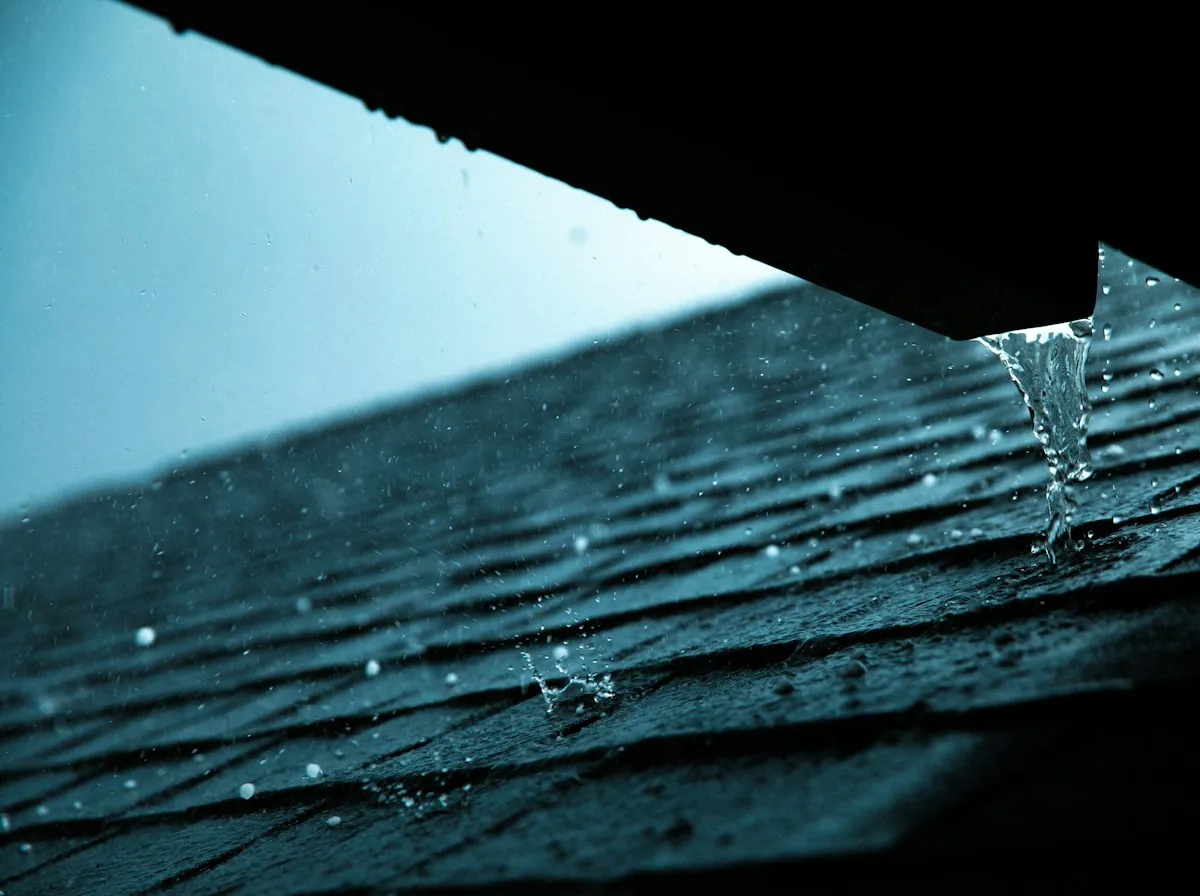
An ice dam forms when heat escaping into the roof space melts the underside of the snowpack, the meltwater runs down to the cold overhang beyond the heated building, and freezes there. The ridge of ice that builds holds the next lot of meltwater back until it finds a way under the courses -- which, on an old house with no ice barrier, it will.


Clearing a dam safely is generally $300 to $900 depending on access and how much of it there is. That stops the water. It does not stop the dam, because an ice dam is a heat problem rather than a roofing one, and the work that ends it is insulation, air sealing and ventilation. Priced as whichever trade the building actually needs. Ordinary house roofing on the residential streets; multi-family work where the unit count changes the sequence; genuine low-slope work behind parapets where access through a tenancy is the constraint.
More than the ceiling. Repeated damming works water under the courses at the eaves winter after winter, so a roof that dams every year is being aged prematurely from the bottom up.
Because the covering was rarely the cause. Plenty of people in this town have paid $15,000 or more for a roof that dammed again the following February, because the warm roof space and the cold eaves were never addressed.
Insulation carried properly to the wall plate, air leaks from the house sealed, soffit ventilation opened up, any fan discharging into the roof taken outside, and ice barrier that runs far enough up the slope to sit inside the heated envelope.
The one area here where the unit count is a real question before anything else, and where genuine low-slope commercial-style roofing sits a few streets from ordinary house roofing. Those are different trades and a quote that treats them alike has not understood the building.
A city rather than a town, with more building types within a mile than the rest of this service area put together.
Worth knowing before you start ringing round, particularly if this started in February.
Wet heavy snow north of Boston does not blow off a roof -- it sits. The melt-refreeze cycle runs at the eaves for weeks, and the ceiling below reports the whole winter's work during the first proper thaw. Which is why the calls arrive in a cluster, in the same two weeks, right across the town at once.
More building types within a mile than the rest of this service area put together, so the first question is what kind of building yours is.
On two- and three-family housing a repair has to account for a junction that somebody else owns part of, and on a building with a business below it has to account for their hours.
Cedar on a two- or three-family building is an unusual choice and worth thinking about carefully, because maintenance that depends on somebody taking responsibility tends not to happen where nobody owns the whole roof..
This is where the genuine low-slope roofing in this service area is: parapet roofs on the older mixed-use buildings, with internal drainage and a business trading underneath.
On a mixed-use or multi-family building, part of the inspection is establishing what can actually be reached -- areas behind parapets, sections over a tenancy with no access.
We pull the permit. That is what keeps you eligible.
Lakeside and Victorian. Details, not area.
Big simple roofs under a lot of trees.
Large houses, complicated roofs, real cedar country.
The simplest roofs here. Layer count decides it.
Hilly, tight, and full of capes with rooms in the roof.
What is worth knowing before you book this.
Usually not, and it is the most expensive misunderstanding in this market. A dam forms because heat escaping into the roof space melts the snow above it and the water refreezes at the cold overhang. New shingles change none of that. Plenty of people here have paid $15,000 or more and dammed again the next February.
No. Chipping takes granules and sometimes whole tabs off with it, and people fall doing it. Clearing is done carefully from a position that is safe to work from -- and it is a holding action either way, because the actual fix is insulation, air sealing and ventilation.
Nobody selling roofs is a neutral source on that, so here is what is known rather than a forecast. Roofing prices follow asphalt input costs, freight and local labor availability, and in this region they spike every spring because an entire winter's worth of damage gets reported in the same two weeks after the first real thaw. The practical consequence is not about the year -- it is that the cheapest time to replace a roof is when you choose to, and the most expensive is the month everybody else has decided at once.
It is a Florida rule and it has no force in Massachusetts. The 25% rule comes from the Florida Building Code Existing Building, where repairing or replacing more than a quarter of a roof within a year can require the whole roof to be brought up to current code. Massachusetts has no equivalent provision -- what governs here is the state building code and your own municipality's permitting. It turns up in searches because national content repeats it without saying which state it belongs to.
A standard asphalt replacement on a Greater Boston single-family house typically runs $12,000 to $22,000, reaching about $30,000 on larger or more complicated roofs. Per square foot that is $6.75 to $11.50 for architectural shingle against $3.50 to $5.50 for three-tab. Boston-area labor puts these figures roughly 10 to 15 per cent above western Massachusetts, which is worth knowing if you are comparing against a statewide average.
The HIC registration number on the paperwork, not just a website. A written contract, as this state requires over $1,000.